Clothing Standards
Who do we Portray?
Grooming & Clothing
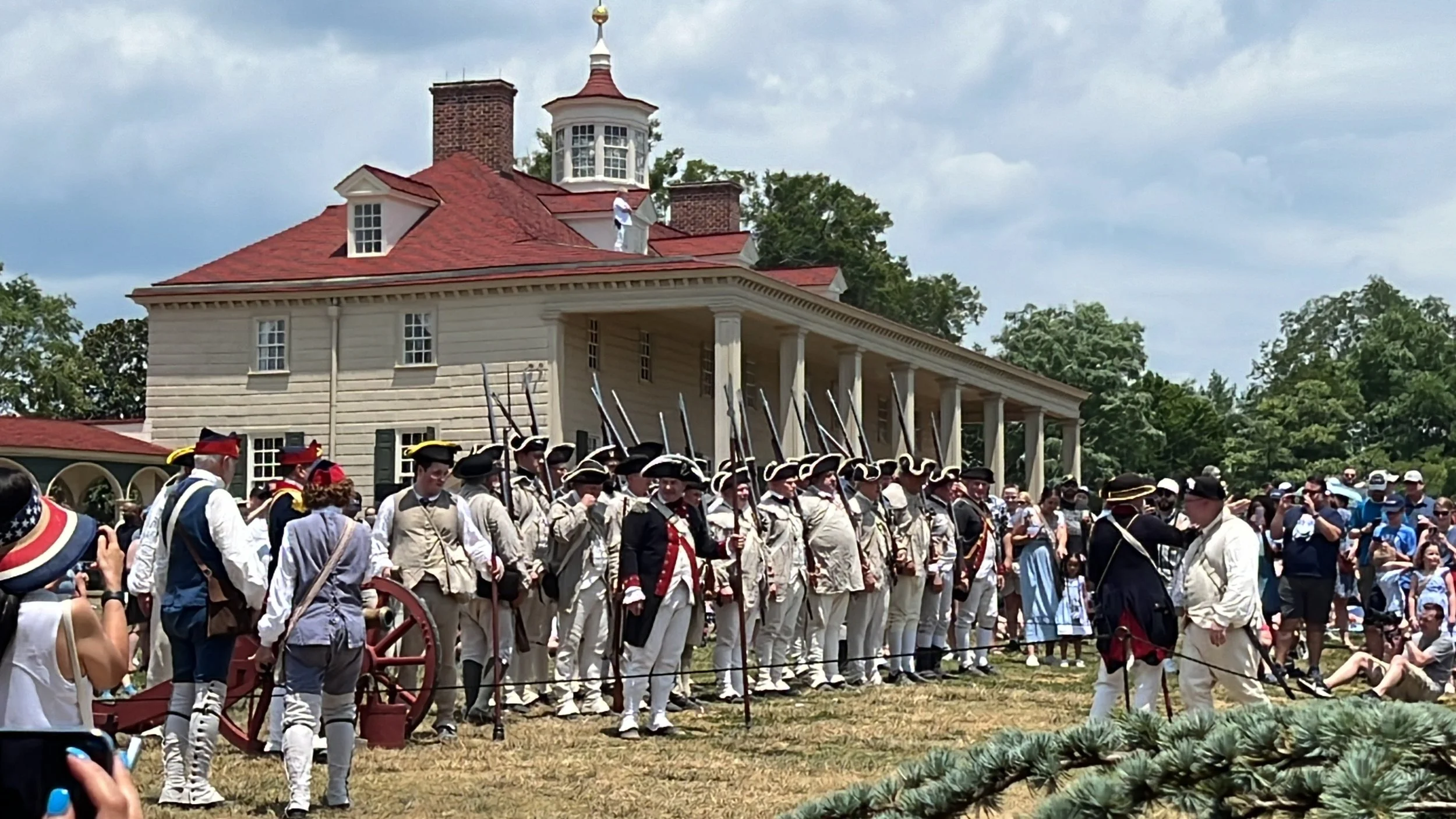
The First Virginia Regiment is a Revolutionary War living history and reenactment group. We portray Continental Army troops from the State of Virginia from 1775 through 1783. The group consists of soldiers who portray the Musket Company, Artillery Crew, as well as civilians who followed and supported the Army.
The unit maintains authenticity standards to which all members are expected to adhere. This includes the specific fabrics and other materials used for our military clothing and gear, as well as the patterns, and construction details. The unit has gone to great lengths to research each item as well as to locate sources of supply and manufacture. We recommend that you coordinate your purchases of clothing and gear with the Quartermaster from sources other than those stipulated by the unit. We recognize it takes time and money to achieve a higher level of authenticity. We do not expect new members to meet all requirements immediately. The group maintains a loaner locker of clothing and gear new members may use while they obtain their military “kit.” We recommend using the loaner locker so you can participate while having the time necessary to obtain the required uniform and gear. We believe the level of authenticity, value, and satisfaction is well worth the time and effort.
Soldier Standards
-
Regimental Coat: The coat is made from high quality dark blue and madder red wool Broadcloth with a smooth finish. Coats are patterned after the well-documented 1779 Regulations as ordered by the Continental Congress. The wool coat is constructed with raw edges (except where noted), lined with serge and linen, and hand finished. The materials should be purchased from the Quartermaster (QM) and made either by one of our approved tailors or according to our detailed instructions. The unit can provide help and guidance for members planning to make their own coat and other garments.
Best
Hand-finished, well-fit coats in straight-bodied or cutaway styles, made of wool or linen
Common colors for wool include drab, brown, green, red, or blue.
Common colors for linen coats include naturals, browns, and blues
Minimum Acceptable
Workman smocks
Well-fit workman’s coat in linen or wool with minor visible machine stitchingWorkman smocks
Well-fit workman’s coat in linen or wool with minor visible machine stitching
Unacceptable
Regimental coats
Hunting shirts, or over-shirts (except for militia)
Baggy coats
Cotton canvas or damask upholstery fabricv
-
-
-
-
-
-
-
Finished Kit
-
Cartridge Box: Soldiers carry a reproduction of the Late War “Congress” box. Our cartridge boxes are made by unit members and offered through the QM.
Bayonet Carriage: The QM offers finished bayonet slings with a heart-shaped frog, believed to date from the War. A “double-frog” sling in kit form is also available.
Musket: Italian (Pedersoli) and Japanese (Miroku) reproduction muskets are allowed; no India-made muskets are permitted for safety reasons. The QM must approve muskets of other manufacture prior to using on the field.
-
Haversack: Our haversack is based on the original British item in the Craig Nanos collection. It is sold as a kit for soldiers to make.
Knapsack: Soldier sling the “New Invented Knapsack-Haversack” carried by troops from Virginia as documented in the Maryland Historical Society collection. The QM offers this as a kit to be completed by the member. The unit holds periodic workshops to assist in finishing the kit.
-
Item dFacial Hair: Continental Army soldiers were clean-shaven. Common practice for soldiers was to shave at least every two or three days, on special parade days, and for guard duty. Goatees, mustaches, beards or any other creative facial hair is frowned upon as not common for the period.
Hair: The common hairstyle for soldiers was typically tied in a queue, braided, or clubbed. Shorter styles were not unheard of, especially for farmers and tradesmen. At least one order for Virginia’s Continental soldiers, appearing in the Orderly Book of the 6th Virginia Regiment, stipulates that the soldier’s hair should be cut short and all to the same length.
Some members choose to wear their hair long or purchase a wig to enhance their 18th-century military appearance. If your hair or wig is long enough, it should be tied back with a leather thong, or a black ribbon of linen, silk, or wool tape.escription
-
Optional Items subject to uniform of the day orders from the Commanding Officer:
Hunting Shirt: The early war hunting shirt worn is unique to the unit. It is based on descriptions of the garment worn by Virginia’s Continental regiments in Williamsburg during the period 1775 – 1776. The Hunting Shirt is made of heavy, natural color, oznabirg linen. It is a pullover style garment, cut short not to extend lower than the crotch, and has a shirt collar. An Officer’s Hunting Shirt has fringe on the collar.
Our late war hunting shirts are based on descriptions of those worn by troops later in the war.
Blue Wool Leggings: These are made from blue wool supplied by the QM.
First Virginia Soldiers portray the Musket Company as prescribed by the Continental Congress in 1779. We know some details about this uniform from primary source documentation. Gaps in our understanding have been filled by comparable items based on well-documented examples from the period.
Essential Uniform
Artillery Standards
-
Regimental Coat: The coat is made from high-quality dark blue and madder red wool Broadcloth with a smooth finish. Coats are patterned after the well-documented 1779 Regulations as ordered by the Continental Congress. The wool coat is constructed with raw edges (except where noted), lined with serge and linen, and hand-finished. The materials should be purchased from the Quartermaster (QM) and made either by one of our approved tailors or according to our detailed instructions. The unit can provide help and guidance for members planning to make their own coats and other garments.
Regimental Coat: Artillery coats include red wool lining for the coat tails and yellow wool tape around the buttonholes.
Small Clothes: The waistcoat, breeches, and overalls are made from natural colored linen, twill-weave hemp fabric, or wool. The waistcoat (west-kit) is lined with linen and may have working pockets. The waistcoat fits snugly through the body, be the proper length and fit, and may lace up the back. Overalls and breeches fit very snug through the legs and may require tightening after they are worn the first several times since the fabric stretches. The QM offers the fabric and unit pattern for you to either make these garments or send to one of approved tailors.
Shirt: The shirt, worn under the waistcoat, is made of plain, medium weight white linen. The shirt may also be made of dark blue check pattern linen. No other colors or patterns of fabric are allowed. The shirt has a high collar which folds over the neck stock, cuffs no wider than 1 inch, and the shirt-tails extending at least 6 inches (or more) below the crotch. The QM offers the fabric and unit pattern for you to either make these garments or send to one of approved tailors.
Neck Stock: Soldiers wear a black neck stock made of velveret (cotton velvet) or linen, lined with linen, and with buckram stiffening. A black thong or a stock clasp may be used. The QM offers the velveret neck stock with clasps.
Hat: A black cocked hat with white wool tape along the edge of the brim is worn. The cord (or tape) used to hold up the leaves of the hat is black. The cockade is made of plain black linen. Soldiers should purchase their hats from a unit-recommended vendor.
Hat: The Artillery cocked hat has yellow wool tape along the edge of the brim.
Shoes: Members of the unit wear period reproduction shoes. Shoes are black leather with a plain nickel or brass buckle or leather ties.
-
unit owned Cannon and supplies
-
Haversack: Our haversack is based on the original British item in the Craig Nanos collection. It is sold as a kit for soldiers to make.
Knapsack: Soldier sling the “New Invented Knapsack-Haversack” carried by troops from Virginia as documented in the Maryland Historical Society collection. The QM offers this as a kit to be completed by the member. The unit holds periodic workshops to assist in finishing the kit.
-
Facial Hair: Continental Army soldiers were clean-shaven. Common practice for soldiers was to shave at least every two or three days, on special parade days, and for guard duty. Goatees, mustaches, beards or any other creative facial hair is frowned upon as not common for the period.
Hair: The common hairstyle for soldiers was typically tied in a queue, braided, or clubbed. Shorter styles were not unheard of, especially for farmers and tradesmen. At least one order for Virginia’s Continental soldiers, appearing in the Orderly Book of the 6th Virginia Regiment, stipulates that the soldier’s hair should be cut short and all to the same length.
Some members choose to wear their hair long or purchase a wig to enhance their 18th-century military appearance. If your hair or wig is long enough, it should be tied back with a leather thong, or a black ribbon of linen, silk, or wool tape.escription
-
Optional Items subject to uniform of the day orders from the Commanding Officer:
Hunting Shirt: The early war hunting shirt worn is unique to the unit. It is based on descriptions of the garment worn by Virginia’s Continental regiments in Williamsburg during the period 1775 – 1776. The Hunting Shirt is made of heavy, natural color, oznabirg linen. It is a pullover style garment, cut short not to extend lower than the crotch, and has a shirt collar. An Officer’s Hunting Shirt has fringe on the collar.
Our late war hunting shirts are based on descriptions of those worn by troops later in the war.
Blue Wool Leggings: These are made from blue wool supplied by the QM.
First Virginia’s artillery portrays soldiers from the First Continental Artillery Regiment, which was raised in Virginia in 1776. First Virginia Artillery members wear the late war Musket Company uniform as prescribed in Washington’s Orders of 1779, with the following exceptions.
Musicians (Fife and Drum)
-
Regimental Coat: The coat is made from high-quality dark blue and madder red wool Broadcloth with a smooth finish. Coats are patterned after the well-documented 1779 Regulations as ordered by the Continental Congress. The wool coat is constructed with raw edges (except where noted), lined with serge and linen, and hand-finished. The materials should be purchased from the Quartermaster (QM) and made either by one of our approved tailors or according to our detailed instructions. The unit can provide help and guidance for members planning to make their own coats and other garments.
Regimental Coat: Musician coats are red with blue facing and white lining.
Small Clothes: The waistcoat, breeches, and overalls are made from natural colored linen, twill-weave hemp fabric, or wool. The waistcoat (west-kit) is lined with linen and may have working pockets. The waistcoat fits snugly through the body, be the proper length and fit, and may lace up the back. Overalls and breeches fit very snug through the legs and may require tightening after they are worn the first several times since the fabric stretches. The QM offers the fabric and unit pattern for you to either make these garments or send to one of approved tailors.
Shirt: The shirt, worn under the waistcoat, is made of plain, medium weight white linen. The shirt may also be made of dark blue check pattern linen. No other colors or patterns of fabric are allowed. The shirt has a high collar which folds over the neck stock, cuffs no wider than 1 inch, and the shirt-tails extending at least 6 inches (or more) below the crotch. The QM offers the fabric and unit pattern for you to either make these garments or send to one of approved tailors.
Neck Stock: Soldiers wear a black neck stock made of velveret (cotton velvet) or linen, lined with linen, and with buckram stiffening. A black thong or a stock clasp may be used. The QM offers the velveret neck stock with clasps.
Hat: A black cocked hat with white wool tape along the edge of the brim is worn. The cord (or tape) used to hold up the leaves of the hat is black. The cockade is made of plain black linen. Soldiers should purchase their hats from a unit-recommended vendor.
Shoes: Members of the unit wear period reproduction shoes. Shoes are black leather with a plain nickel or brass buckle or leather ties.
-
Musicians will also carry accoutrements necessary for their instruments rather than a musket and a soldier’s accoutrements.
-
Haversack: Our haversack is based on the original British item in the Craig Nanos collection. It is sold as a kit for soldiers to make.
Knapsack: Soldier sling the “New Invented Knapsack-Haversack” carried by troops from Virginia as documented in the Maryland Historical Society collection. The QM offers this as a kit to be completed by the member. The unit holds periodic workshops to assist in finishing the kit.
-
Facial Hair: Continental Army soldiers were clean-shaven. Common practice for soldiers was to shave at least every two or three days, on special parade days, and for guard duty. Goatees, mustaches, beards or any other creative facial hair is frowned upon as not common for the period.
Hair: The common hairstyle for soldiers was typically tied in a queue, braided, or clubbed. Shorter styles were not unheard of, especially for farmers and tradesmen. At least one order for Virginia’s Continental soldiers, appearing in the Orderly Book of the 6th Virginia Regiment, stipulates that the soldier’s hair should be cut short and all to the same length.
Some members choose to wear their hair long or purchase a wig to enhance their 18th-century military appearance. If your hair or wig is long enough, it should be tied back with a leather thong, or a black ribbon of linen, silk, or wool tape.escription
-
Optional Items subject to uniform of the day orders from the Commanding Officer:
Hunting Shirt: The early war hunting shirt worn is unique to the unit. It is based on descriptions of the garment worn by Virginia’s Continental regiments in Williamsburg during the period 1775 – 1776. The Hunting Shirt is made of heavy, natural color, oznabirg linen. It is a pullover style garment, cut short not to extend lower than the crotch, and has a shirt collar. An Officer’s Hunting Shirt has fringe on the collar.
Our late war hunting shirts are based on descriptions of those worn by troops later in the war.
Blue Wool Leggings: These are made from blue wool supplied by the QM.
First Virginia’s Musicians wear the late war Musket Company uniform as prescribed in Washington’s Orders of 1779 with the following exception.
Civilian Standards
A proper impression is encouraged for all civilians which requires some research on your part.
The following are suggested impressions that are appropriate to civilians found with the Continental Army. These are the most common roles seen with the Army; however, the list is not all-inclusive. If thorough research leads you to another impression, then please discuss with our Civilian Coordinator.
Civilian Accordions:
Period Dress (Natural fibers, appropriate silhouettes).
Camp Life (How to contribute to the "home front" in the field).
Women
Children (Aged 13 and over)
Men
SeamstressPetty SutlerCordwainerLaundressNurseChaplainNurseBeggarSutlerPetty SutlerArmorerPoor bedraggled soldier’s wife/BeggarSurgeon